

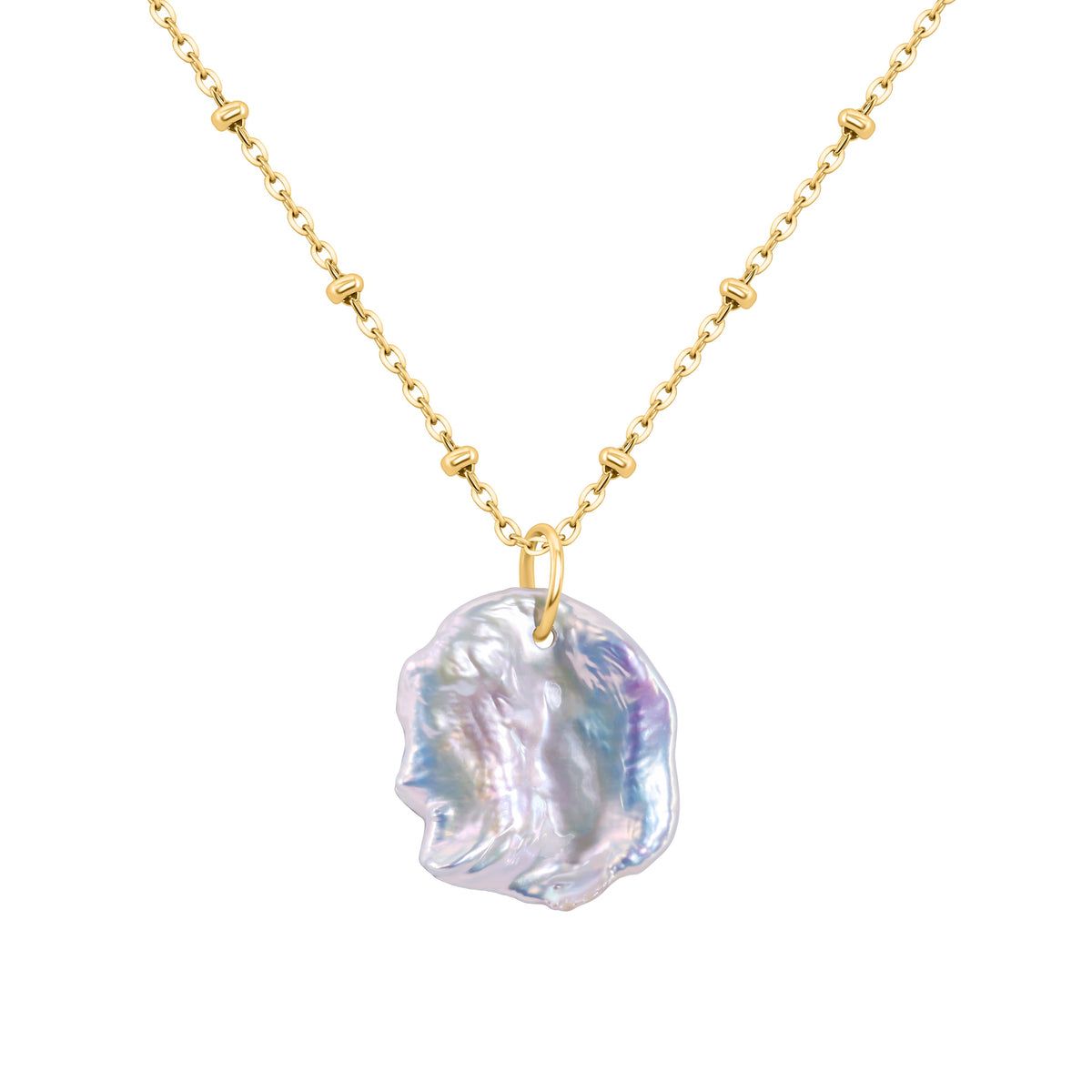
How to Tell If Your Keshi Pearl Jewelry Is Real
Genuine keshi pearls are never perfectly round, and no two look exactly alike — if every pearl in a piece is identical, symmetrical, and glassy-smooth, that's a sign you're looking at an imitation, not a real one. Authentic keshi pearls also have a deep, almost glowing luster called "orient," real weight in the hand, and a slightly textured surface, all of which plastic and glass substitutes fall short on.
What Makes a Pearl a "Keshi" Pearl
Keshi pearls form as a natural byproduct of the cultured pearl process. When an oyster rejects or expels the nucleus bead used to start a cultured pearl, it sometimes keeps depositing nacre anyway — and that leftover growth becomes a keshi pearl. Because there's no bead at the center guiding its shape, a keshi pearl is 100% solid nacre, which is exactly why it grows into an organic, one-of-a-kind form instead of a uniform sphere.
That's also why our Keshi Pearl Medallion Necklace never looks quite the same twice — every pearl is a little different from the last.
5 Ways to Tell If Your Keshi Pearls Are Genuine
1. Irregular shape. Real keshi pearls are baroque by nature — slightly lumpy, ruffled, or off-round. A perfectly round, symmetrical "keshi" pearl is almost certainly not one.
2. Deep, shifting luster. Hold the pearl under a light and tilt it slowly. Genuine nacre reflects light in soft, shifting layers — sometimes called "orient" — rather than one flat, uniform shine.
3. Real weight. Nacre is denser than plastic, resin, or coated glass. A real pearl feels substantial for its size; an imitation often feels surprisingly light.
4. Slight surface texture. Look closely (a loupe or your phone's zoom helps) — genuine pearls have faint, natural texture and tiny irregularities. Glass and plastic beads tend to look suspiciously smooth and glassy up close.
5. No two pearls match. In a genuine keshi piece, every pearl should vary slightly in shape, size, or sheen from the one next to it. A strand where every pearl is a carbon copy is a red flag.
What Fake "Pearl" Jewelry Usually Is
Most imitation pearls fall into one of three categories: coated glass beads (glossy, perfectly round, chip easily to reveal the glass underneath), molded plastic or acrylic beads (very light, often with a visible seam), and dyed shell beads (closer to the real thing in weight, but perfectly uniform in shape since they're cut, not grown). None of these will show the irregular, organic form that defines a true keshi pearl.
How to Check the Keshi Pearls You Already Own
A few simple at-home checks can help confirm what you're wearing:
- Compare each pearl in the piece to its neighbors — natural variation is a good sign, not a flaw.
- Rotate the piece under a lamp and watch how the light moves across the surface — real nacre shifts and glows rather than glinting in one spot.
- Zoom in with your phone camera to check for a visible seam (a sign of molded plastic) or an unnaturally glassy coating.
If you're shopping for a new piece, pairing a genuine keshi pearl necklace with something simpler — like the Coastline Layers Bracelet — lets the pearl's natural irregularity stay the star of the look instead of competing with other statement pieces.
Keshi pearls aren't the only real pearls worth knowing how to spot, either. If you're comparing options, our Minimalist Freshwater Pearl Bracelet uses genuine freshwater pearls, which are rounder and more uniform than keshi by nature — a good reminder that "real" doesn't always mean "round."
FAQ: Keshi Pearl Authenticity
Are keshi pearls real pearls?
Yes. Keshi pearls are 100% nacre with no bead nucleus, which is actually why many jewelers consider them an especially pure form of pearl, not a lesser one.
Why aren't keshi pearls perfectly round?
Because they grow without a nucleus to guide their shape, keshi pearls take on whatever organic form the nacre layers naturally settle into. That irregular shape is a hallmark of authenticity, not a defect.
Should every keshi pearl in a piece look identical?
No — natural variation between pearls is expected and is actually a good sign. If every pearl in a strand or pendant looks exactly the same, that's more likely a sign of a manufactured imitation than a genuine one.
Want to see the real thing in person? Browse our guide to keshi pearls vs. traditional pearls for more on what sets this pearl type apart.
Read more
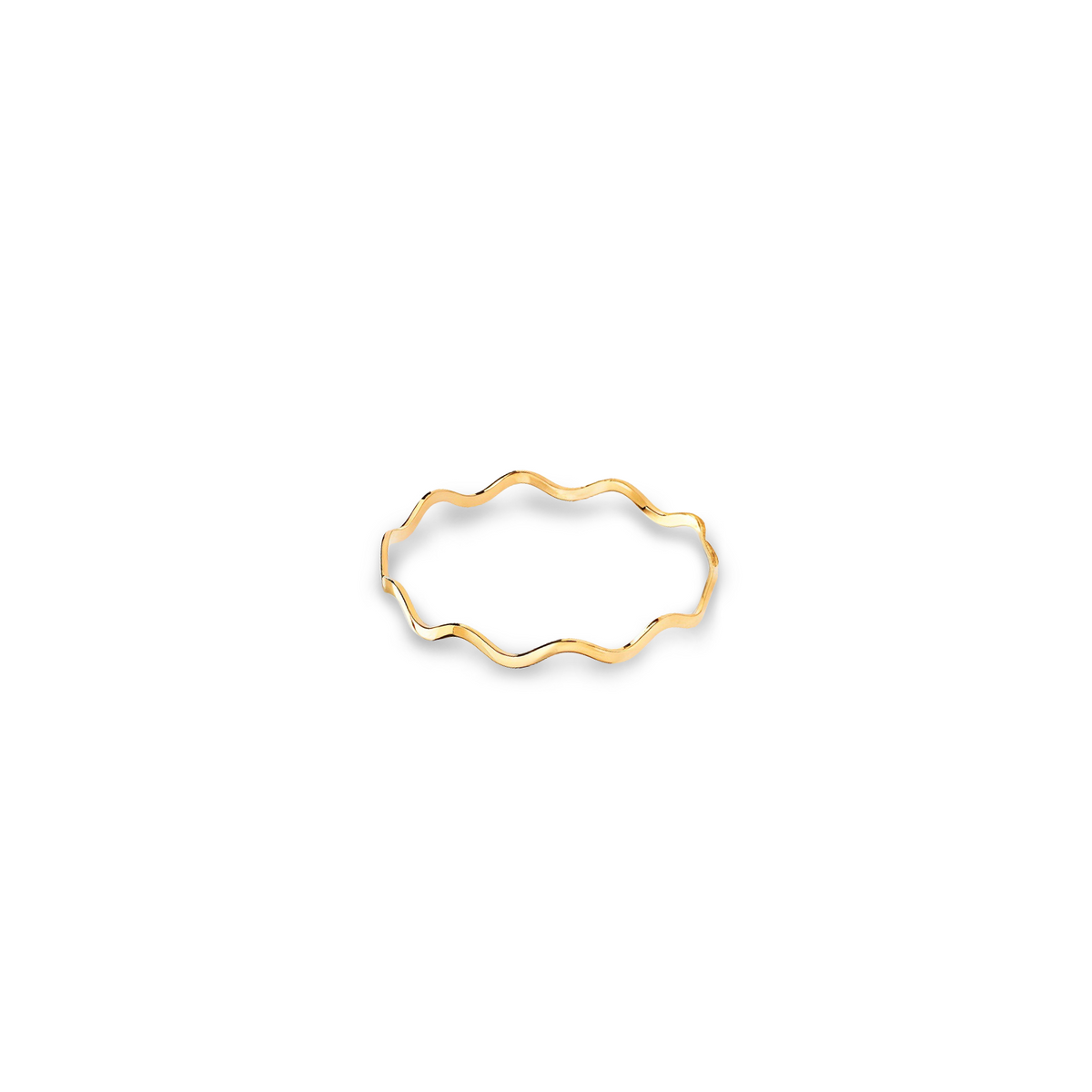
A sizing and stacking guide for the Dainty Wave Ring—how to find your size, which bands pair well for the stacked-ring trend, and how to style it day to day.
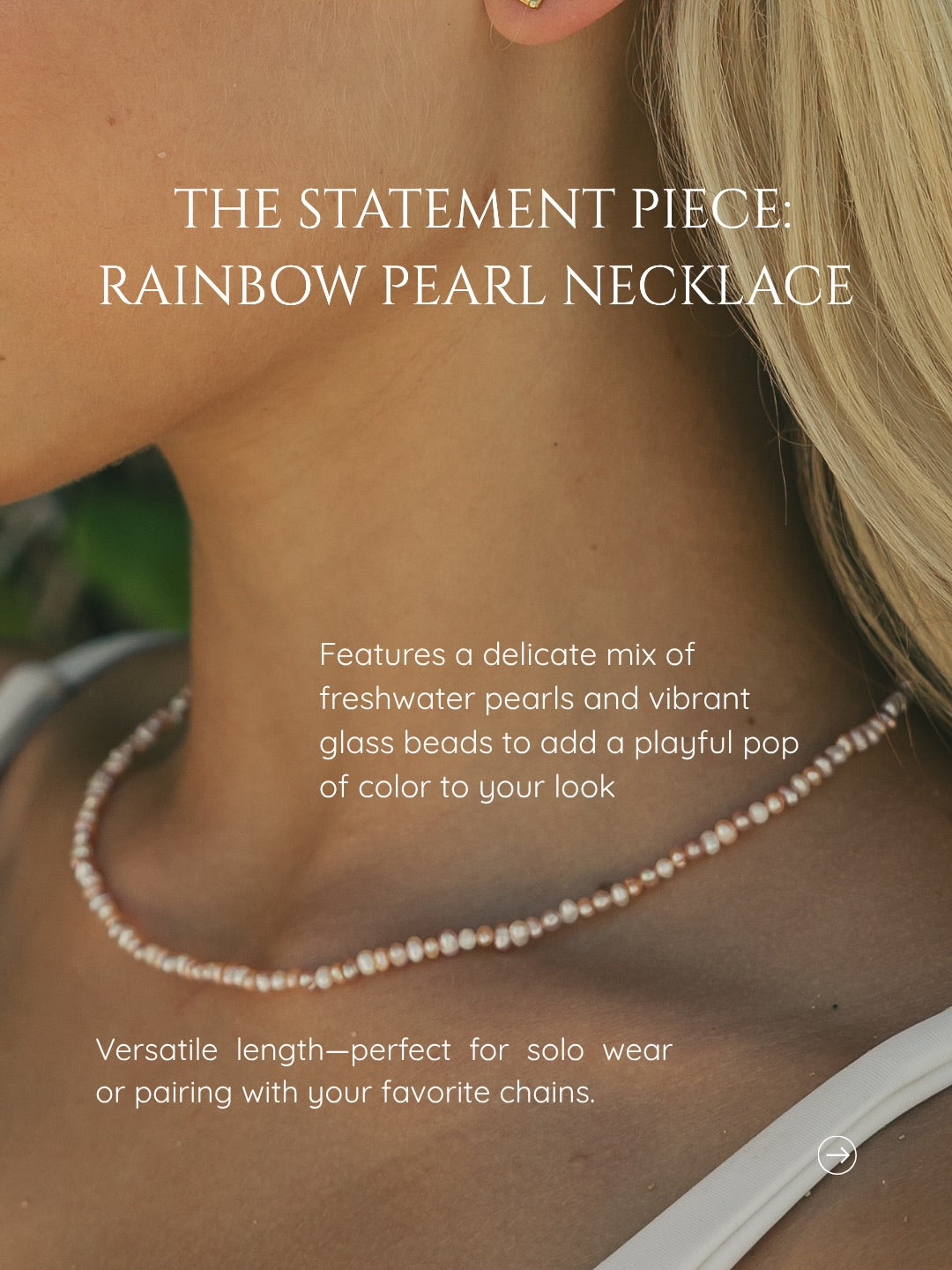
A simple framework for building a small jewelry capsule — the four waterproof, tarnish-free pieces that mix with everything — plus how the chunky, Y2K-era accessory trend fits right in.


