


Gold Vermeil vs. Solid Gold vs. Tarnish-Free Gold: What's the Difference?
Gold vermeil, solid gold, and tarnish-free gold are three different things, even though all three get sold as "gold jewelry." Solid gold is gold all the way through. Gold vermeil is a layer of real gold over sterling silver. Tarnish-free gold is a layer of real gold plated over a non-reactive base metal like stainless steel, built specifically to survive the water and sweat that eventually dull the other two.
The confusion is understandable — all three can look identical sitting in a jewelry box. The difference only shows up months later, in how each one actually wears.
- Solid gold: gold all the way through. Never tarnishes. Heavier, and priced by the gram.
- Gold vermeil: real gold plated over sterling silver. Tarnishes if worn in water or sweat regularly.
- Tarnish-free gold: real gold plated over stainless steel. Built to be worn in water and sweat daily.
What Is Solid Gold?
Solid gold jewelry is made of a gold alloy all the way through — 10K, 14K, 18K, and so on, with the karat number telling you what percentage of the metal is actually gold (24K is pure gold, which is too soft for most jewelry on its own). Because there's no plating to wear through, solid gold never flakes or fades. The tradeoff is cost and weight: solid gold is priced by the gram at the current market rate, which puts even a small, simple piece well above $200-300.
What Is Gold Vermeil?
Gold vermeil (pronounced "ver-MAY") is sterling silver with a layer of real gold plated on top. By U.S. regulation, that gold layer has to be at least 2.5 microns thick and at least 10 karat — a meaningfully thicker, better-quality layer than the gold plating on a cheap costume piece, which is why vermeil holds up better than a basic plated chain. But the base metal underneath is still silver, and silver oxidizes and tarnishes when it's exposed to moisture, sweat, and air, especially around salt water or chlorine. A vermeil piece worn in the shower or pool regularly will usually start to show it within weeks.
What Is Tarnish-Free Gold?
Tarnish-free gold swaps the base metal again. Instead of silver, it's stainless steel plated in real 14K or 18K gold. Stainless steel doesn't oxidize or react to water the way silver does, so the gold layer sitting on top of it isn't fighting a base metal that's trying to tarnish underneath. That's the whole point of the category: jewelry built so you can shower, swim, sweat, and sleep in it without watching it dull. It's also a big reason tarnish-free pieces tend to sit well on sensitive skin — stainless steel is one of the more skin-friendly base metals jewelry gets built on. Our Dainty Wave Ring and Dome Ring are both stainless steel plated in real gold for this exact reason — not because it's cheaper to produce than vermeil, but because it's the one of the three actually engineered to survive daily water exposure.
So Which One Should You Actually Wear Every Day?
If you don't take jewelry off — not for the shower, not for a swim, not for the gym — tarnish-free gold is the only one of the three built for that. Solid gold can technically handle water fine since it can't tarnish, but the price tag means most people still treat it like special-occasion jewelry rather than something to sleep in. Vermeil looks and feels the closest to solid gold at a fraction of the price, but it needs to come off before water, which defeats the purpose if what you actually want is jewelry you can forget you're wearing. That's the thinking behind pieces like our Classic Hoops and Chunky Ring — so the answer to "can I shower in this?" is just yes.
FAQ: Gold Vermeil vs. Solid Gold vs. Tarnish-Free Gold
Is gold vermeil real gold?
Yes. The surface layer is real gold, at least 10 karat and at least 2.5 microns thick by legal definition. What's not gold is the base underneath — that's sterling silver, which is why vermeil can tarnish even though the gold itself is genuine.
Is tarnish-free gold the same as gold-filled?
No. Gold-filled jewelry is a thick layer of gold mechanically bonded to a base metal, usually brass, and it's a separate category from both vermeil and the stainless-steel-plus-gold-plating construction tarnish-free jewelry uses. Tarnish-free gold is defined by what the gold is plated over — a non-reactive metal like stainless steel — not by how thick that gold layer is.
Will tarnish-free gold ever fade?
Every plated piece wears thinner with years of daily friction eventually — nothing plated lasts literally forever. But because the base metal doesn't tarnish or oxidize on its own, a tarnish-free piece won't develop the greenish or black discoloration that vermeil and regular gold-plated jewelry are prone to. For more on how that holds up over time, see our guide to tarnish-free gold jewelry.
Read more
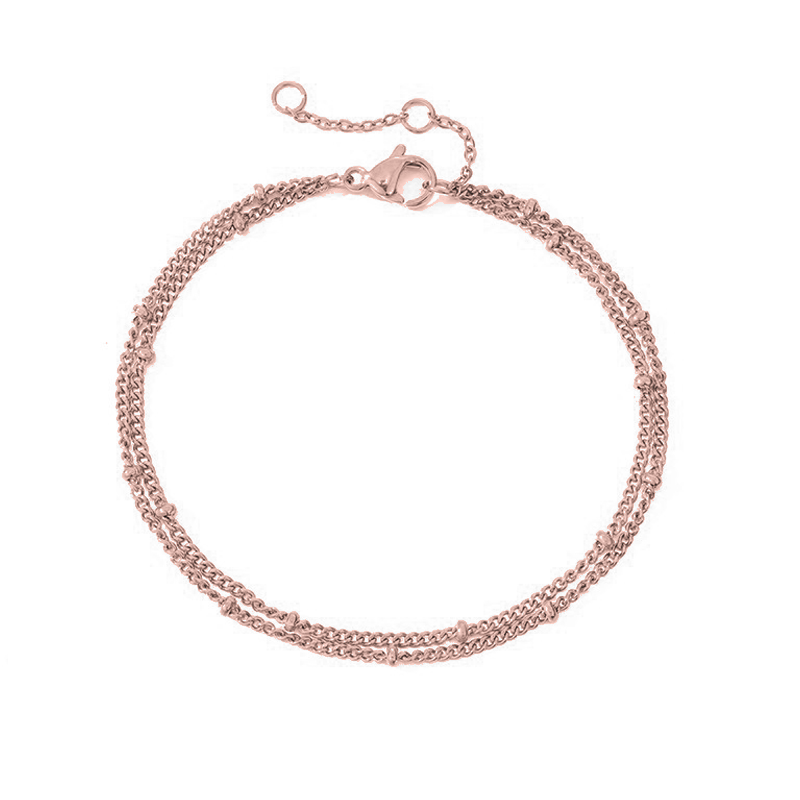
Three habits keep a necklace stack from knotting itself by noon: uneven lengths, individually clasped chains, and metal that doesn't snag or tarnish.
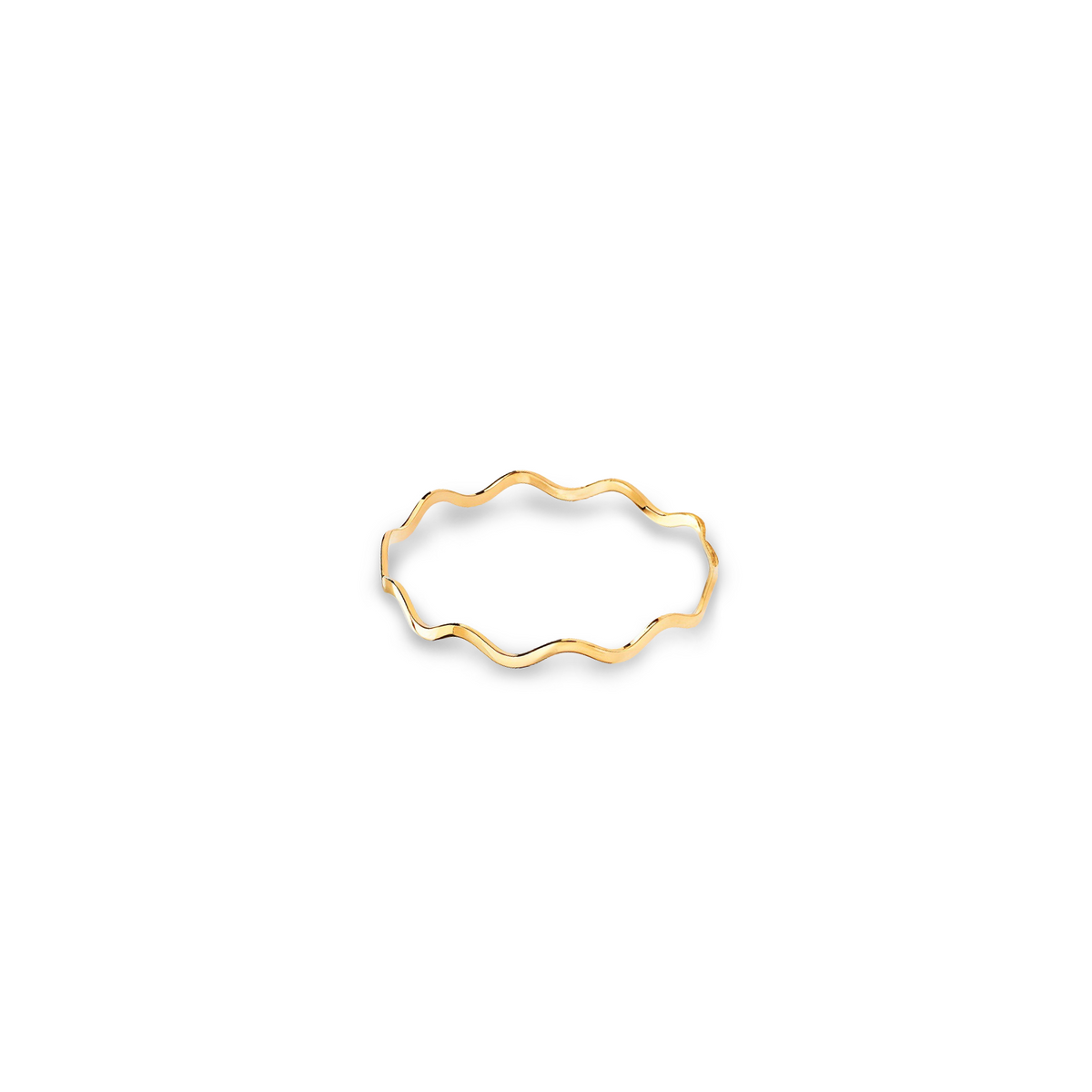
A sizing and stacking guide for the Dainty Wave Ring—how to find your size, which bands pair well for the stacked-ring trend, and how to style it day to day.


