

How to Layer Necklaces Without Them Tangling
The fastest way to stop necklaces from tangling is to vary their chain lengths by at least 2 inches, clasp each piece on separately instead of looping it over your head with the others already on, and keep pendants light enough that they don't swing into each other. Do those three things and a three- or four-piece stack stays separated and settled all day, instead of knotting itself into a ball by lunchtime.
Why Necklaces Tangle in the First Place
Tangling almost always comes down to two necklaces sitting at the exact same length. When two chains hang at the same drop, every arm movement, hug, or seatbelt click gives them a chance to cross over, and once a clasp slips through a loop, the knot tightens itself with every move you make afterward. Thin, lightweight chains are the worst offenders because they have less structure to hold their own shape — which is also why a flimsy chain is the first thing to kink or snap under a knot you're trying to work loose.
The No-Snag Method, Step by Step
Layering well is less about buying the "right" pieces and more about putting them on in the right order:
- Stagger the lengths. A good rule of thumb is a 2-3 inch gap between each necklace — a shorter choker, a mid-length pendant, and a longer chain underneath.
- Clasp each one on its own. Put on the shortest piece first and fasten it completely before adding the next. Sliding a second necklace over your head while the first is already on is how loops get caught.
- Mix textures, not just lengths. A smooth chain next to a textured chain of the same length will still tangle less than two identical ones, because the links don't nest into each other the same way.
- Let pendants settle before you move. Give your stack a second to hang naturally after you clasp it rather than immediately twisting to check a mirror — that twist is usually what starts the first cross.
Building a Stack That Doesn't Fight Itself
A reliable three-piece stack usually has one anchor, one middle piece, and one shorter layer closest to your collarbone. The anchor is typically the piece with the most visual weight — something like the Keshi Pearl Medallion Necklace, where the pearl's natural shape gives it enough presence to sit at the bottom of the stack without competing with anything above it. From there, a mid-length chain and a shorter choker-length piece round things out without adding bulk at the same drop as the medallion.
If you're starting from scratch, it's easier to build a stack around pieces with slightly different clasp styles and chain weights rather than buying three of the same necklace in different lengths — identical chains are more prone to tangling than varied ones, even when the lengths are staggered correctly.
Layering Doesn't Stop at Your Neck
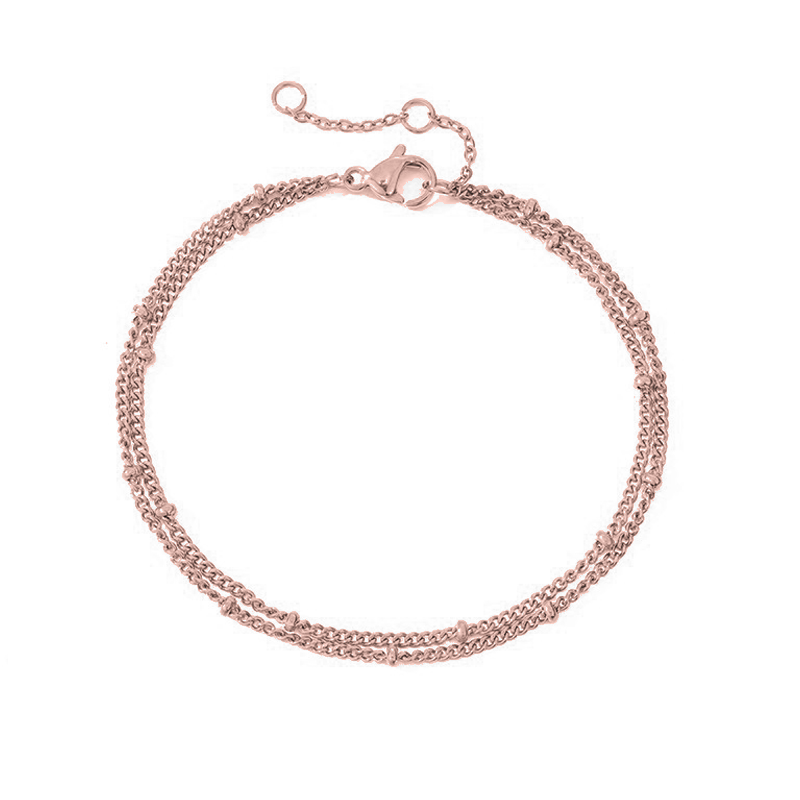
The same staggering principle works on your wrist. The Coastline Layers Bracelet is built with two chains on one bracelet specifically so you get a layered look without stacking separate pieces that can tangle against each other — it uses the same chain style as the Keshi Pearl Medallion Necklace, so the two read as a cohesive stack when worn together rather than two unrelated pieces competing for attention.
Keep the Stack Looking Good All Day
A layered stack only stays tangle-free if you're not taking it off and putting it back on constantly — every removal is another chance for a clasp to catch. That's where waterproof, tarnish-free materials matter: pieces plated in real 14K gold over stainless steel can go through a shower, a workout, or a swim without discoloring, so there's no reason to strip your stack off every time you leave the house. For more ideas on pairing a medallion piece with the rest of your layers, see our full guide to styling medallion necklaces.
FAQ: Layering Necklaces Without Tangling
How many necklaces can I layer at once without them tangling?
Three is the easiest number to manage well. Once you get to four or five, even perfectly staggered lengths start to compete for the same space, and the odds of a cross-over climb with each additional piece.
What's the best necklace length to add to an existing stack?
Add whatever length creates at least a 2-3 inch gap from what you're already wearing. If your anchor piece sits at 18 inches, a 16-inch or 20-inch addition will sit cleanly above or below it instead of hovering at the same drop.
Do tangled necklaces damage the chain?
They can, especially thin chains that get kinked while you're working a knot loose. Sturdier, stainless-steel-based chains hold their shape better under that kind of stress than delicate pure-gold or silver chains, which is one more reason material matters as much as length when you're layering regularly.
Read more
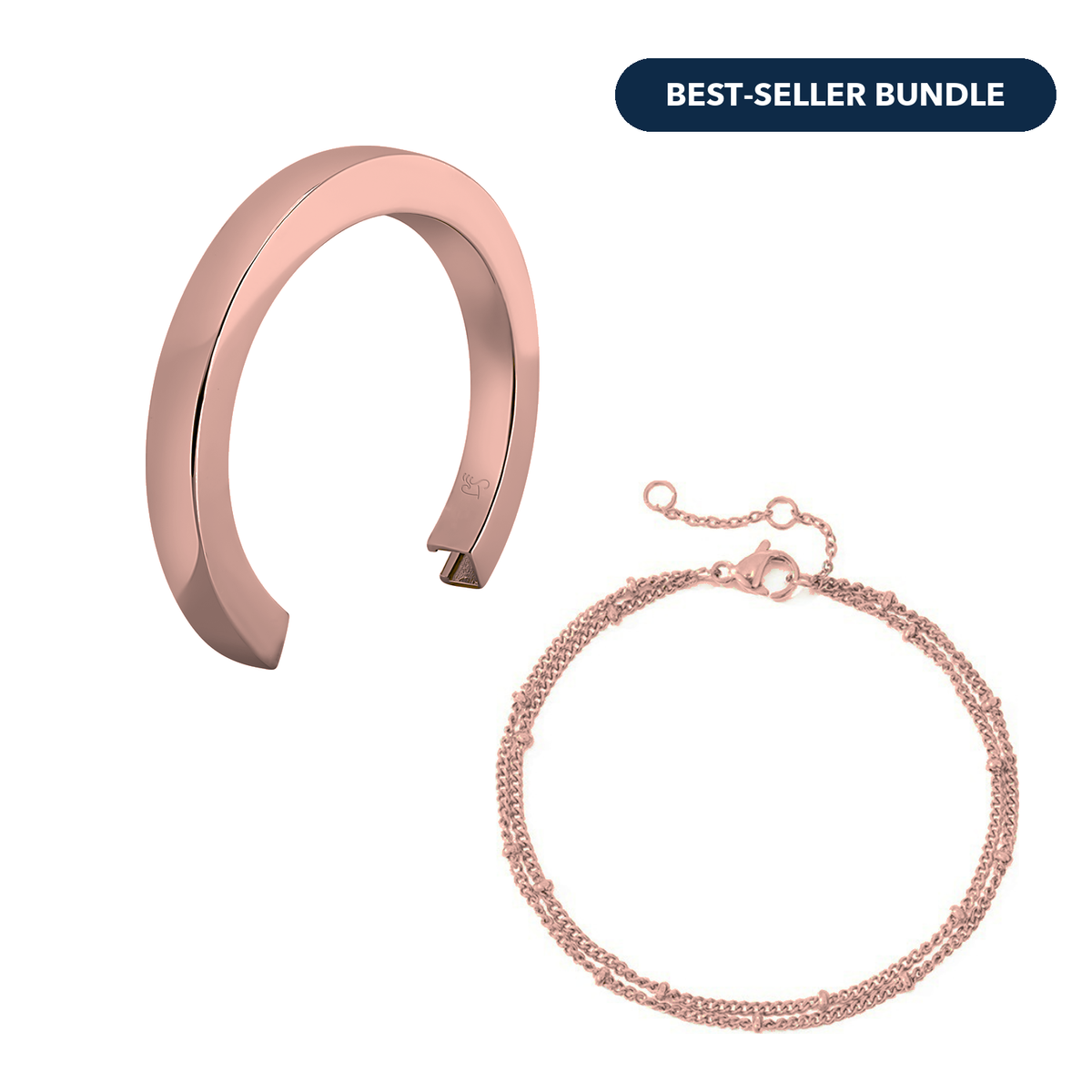
Shopping for the surfer, swimmer, or beach-loving woman in your life? Here's a 2026 gift guide to waterproof, tarnish-free jewelry she'll actually keep wearing.

Gold vermeil, solid gold, and tarnish-free gold aren't the same thing — and the difference decides whether your jewelry survives the shower. Here's what's actually underneath the shine.


