

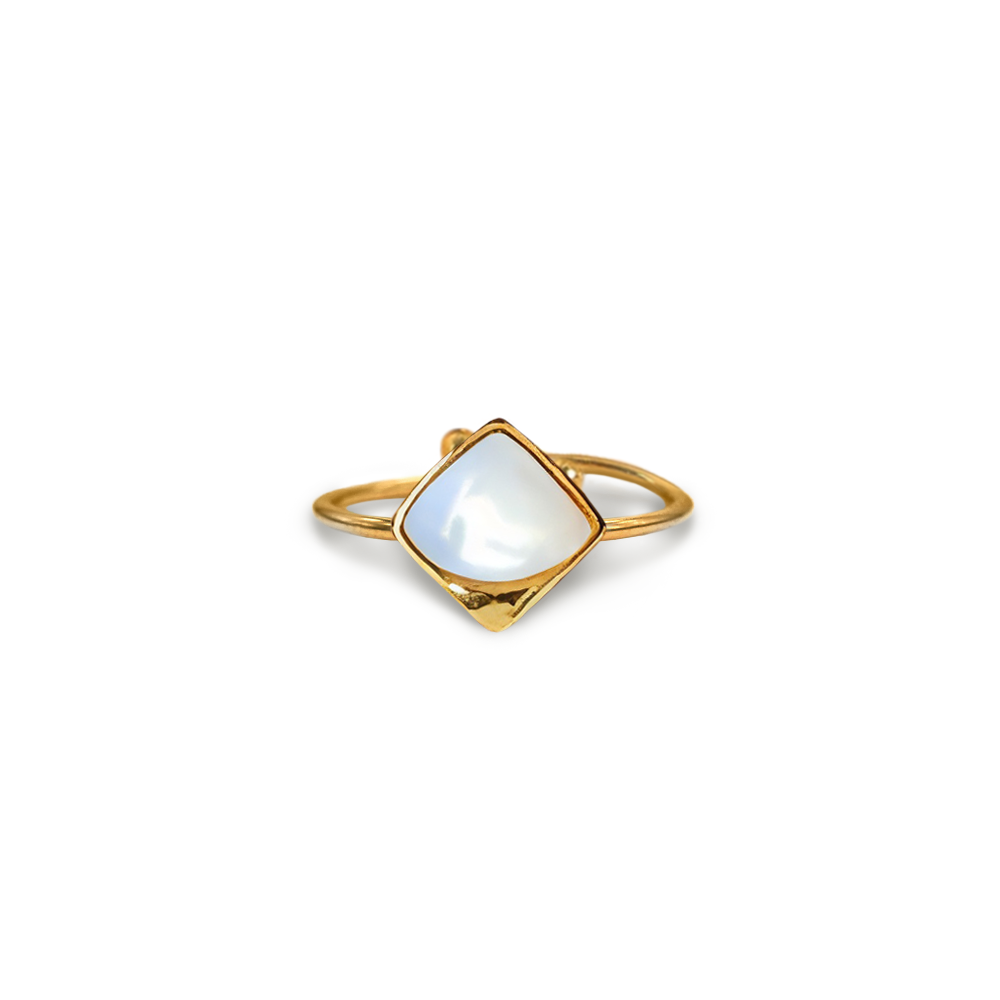
Mother-of-Pearl Jewelry 101: What It Is and Why It's Trending
Mother-of-pearl is the iridescent, pearl-like lining found inside certain mollusk shells — the same light-catching material that forms pearls themselves, cut and polished into thin inlays for rings, earrings, and necklaces. It's showing up everywhere in jewelry right now because it gives you that soft, color-shifting shimmer of a pearl, but in a flatter, more wearable form that holds up to daily life far better than a delicate cultured pearl does.
What Exactly Is Mother-of-Pearl?
Inside the shells of oysters, abalone, and other mollusks is a smooth, layered substance called nacre. The mollusk secretes it to line and protect its shell, and over years those microscopic layers build up into the thick, pearlescent coating you see when a shell is cracked open. That coating is mother-of-pearl. It's the exact same material a pearl is made of — a pearl is just nacre that built up in rounded layers around a tiny irritant, while mother-of-pearl is nacre in its flat, shell-lining form.
Because it's cut from real shell rather than grown as a pearl, mother-of-pearl can be shaped into larger, flatter pieces — which is why you'll see it set into rings and stud earrings where a round pearl wouldn't sit as cleanly.
Why Mother-of-Pearl Jewelry Is Having a Moment
A few things are driving the trend at once. It reads as quiet-luxury rather than flashy — a soft, neutral shimmer that shifts between white, silver, and pale blue depending on the light, so it pairs with almost anything in your closet. It's also considerably more affordable than fine pearl jewelry, since a single shell yields far more usable material than an oyster yields pearls. And it's genuinely durable: our Mother-of-Pearl Horizon Ring is set in gold-plated stainless steel specifically so the shimmer survives the shower, the gym, and the pool instead of living in a jewelry box for special occasions only.
How to Tell Real Mother-of-Pearl from Imitations
Because the trend has grown so fast, a lot of what's sold as “mother-of-pearl” is actually resin or glass printed to look iridescent. A few quick checks:
- Look for natural variation. Real mother-of-pearl has subtle, irregular color shifts and faint grain lines. Imitations tend to look too perfectly uniform.
- Check the weight and cool touch. Genuine shell feels slightly heavier and cooler against your skin than plastic or resin, at least for the first few seconds.
- Tilt it in the light. Authentic nacre shifts color as the angle changes — you'll catch flashes of pink, blue, or green inside what looks like plain white. A flat, static shine usually means it's printed rather than real.
Every genuine mother-of-pearl inlay is a little different, which is part of the appeal — no two pieces catch the light in exactly the same way.
How to Wear and Care for Mother-of-Pearl Jewelry
One of the biggest misconceptions about mother-of-pearl is that it's delicate. Shell is actually quite hard, but it can dull or go cloudy over time if it's exposed to harsh chemicals like chlorine-heavy cleaning products or perfume sprayed directly onto it. The setting around it matters more than the shell itself — a mother-of-pearl piece set in a tarnish-resistant metal, rather than cheap plating that flakes, is what actually determines whether it still looks good in a year.
That's the problem our Mother-of-Pearl Horizon Studs are built to solve — stainless steel plated in real 18K gold underneath the shell, so you can shower, swim, and sweat in them without the metal breaking down around the inlay. You genuinely don't need to take them on and off for daily life, which is the whole point of wearing mother-of-pearl rather than storing it.
Styling Mother-of-Pearl Into Your Everyday Rotation
Because the color is neutral, mother-of-pearl works as a base layer for almost any outfit rather than a statement piece you build around. Wear the ring solo for a minimal, polished look, or stack it with other rings on adjacent fingers — its soft shimmer reads as understated next to brighter metals. The studs do double duty: wear them alone for something clean and simple, or stack hoops above them for a fuller ear look that still keeps a quiet, neutral center. If you already wear pearls, mother-of-pearl is an easy way to extend that same world into pieces like rings and studs, where a round pearl setting doesn't work as well; if you're newer to pearls altogether, our guide to freshwater pearl bracelets is a good next read.
Mother-of-Pearl Jewelry FAQ
Is mother-of-pearl the same thing as a pearl? Not exactly. Both are made of nacre, the substance mollusks secrete to line their shells, but a pearl is nacre built up in rounded layers around an irritant, while mother-of-pearl is the flat nacre lining of the shell itself.
Is mother-of-pearl jewelry waterproof? The shell material itself handles water fine — it's the metal setting around it that usually fails first. Pieces like the Mother-of-Pearl Horizon Ring and Studs use gold-plated stainless steel specifically so the whole piece, not just the inlay, can handle water, sweat, and daily wear without tarnishing.
Does mother-of-pearl jewelry work for sensitive skin? The shell itself is inert and rarely an issue. Reactions almost always come from the metal underneath it, so look for pieces set in hypoallergenic metals like stainless steel rather than base metal that's simply plated.
Read more
Pikake, puakenikeni, plumeria, and crown flower — four of Hawaii's most iconic blossoms, explained, plus how to tell them apart and wear them every day.

"Hypoallergenic" is a marketing term, not a medical guarantee. Here's what actually causes jewelry reactions, which metals dermatologists point to as safer, and how to shop for sensitive skin with ...


